
Hey everyone, it’s Day of the Dead. For those who observe and celebrate the holiday, you would have already seen ofrendas (altars) or calaveras (skulls) around your community in public spaces or built your own private one at home. For those that don’t know, Día de los Muertos (Day of the Dead) is a traditional Mexican holiday to honor departed loved ones. Just like Cinco de Mayo IS NOT Mexican Independence Day, Día de los Muertos IS NOT Mexican Halloween. While there is no trick-or-treating, there are parties and family gatherings (with food and treats, including a sweet bread called pan de muerto) as well as visits to the cemetery and putting up small altars in remembrance of those who have died. Many believe and welcome the return of their dearly departed’s spirits on Día de los Muertos.
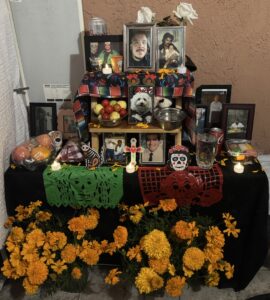
An ofrenda by the Sanchez family.
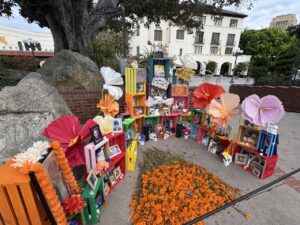
An ofrenda at Olvera Street. The 7GG team was there celebrating Hispanic Heritage Month (remember that should be celebrated year round and not just for a month) and celebrated Day of the Dead too.
Día de los Muertos is usually observed annually on November 1st (All Saints Day) and 2nd (All Souls Day).
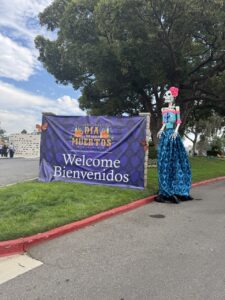
The annual Día de los Muertos event held at Inglewood Park Cemetery.
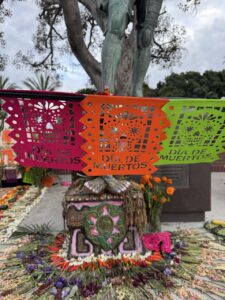
Día de los Muertos decorations at Olvera Street.
Día de los Muertos celebrations are filled with music, performances, parades, and dancing. In place of mourning, families gather to remember and celebrate their departed loved ones.
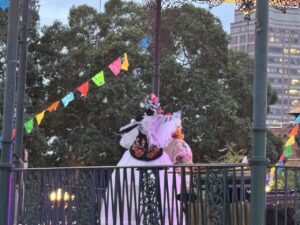
A performance at Olvera Street in celebration of Día de los Muertos.
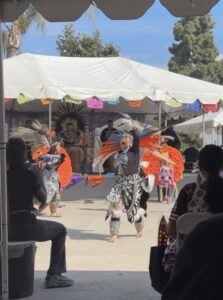
A Danza Azteca performance at the Inglewood Park Cemetery Día de los Muertos event.
Día de los Muertos is a significant way to keep those who have passed on alive in our hearts and memories.
If you want to see how serious celebrations for Día de los Muertos are in Mexico City, then look no further than the nearly 110 feet tall Catrina that stands in the Zócalo this year. The sculpture broke a Guinness World Record.
There’s more to learn! Check out our games AzTech: The Story Begins, AzTech: Meet the Maya (both playable in Spanish and English) and Empiric Empireto learn more about Latin American history.